I work on generative art, algorithmic visual systems, sound-based computation, and critical explorations of artificial intelligence in artistic contexts.
My artistic practice focuses on collective patterns, movement, rhythm, and emergent behavior expressed through code, visual systems, and sonification.
Selected Works
ECHO
- Year
-
2021
- With
-
Lúa Coderch, Lluís Nacenta, Iván Paz
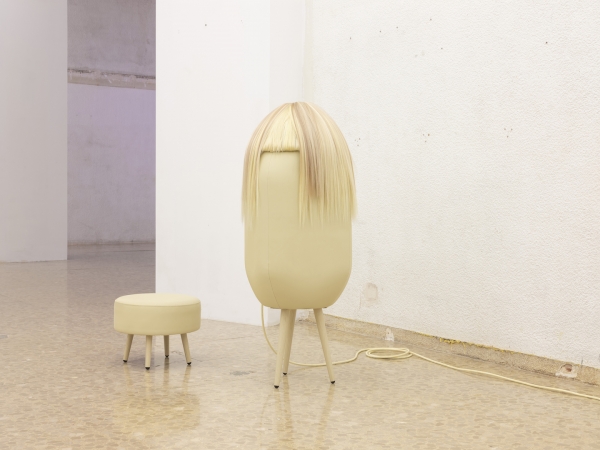
Echo is a body that listens, a body that speaks, a body that "thinks."
Echo is an open-source sculpture, the result of a collaboration between Lúa Coderch, Julia Múgica, Lluís Nacenta, and Iván Paz. Drawing on the myth of the nymph Echo, the sculpture only knows and can only use words it has previously heard. Echo listens, responds, and rehearses ways of combining the words it has learned. It depends on what others choose to say to it in order to enrich its language and articulate increasingly complex thoughts. As in the myth, Echo is a body dispossessed of meaning, or one that only makes sense by chance. Despite this, it ultimately finds a way to speak, leaning largely on the listener’s capacity to understand beyond what is said and to grant greater depth to what they hear.
- Links
- Awards
- Exhibitions
-
-
Dilálica Gallery 2021
-
ARCO 2022
-
EIXAM
- Year
-
2024
- With
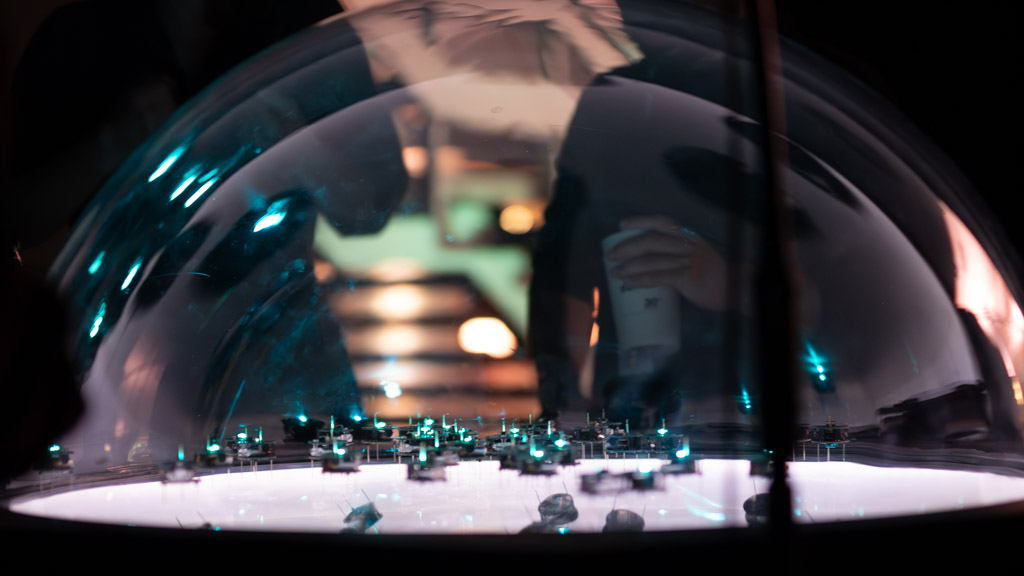
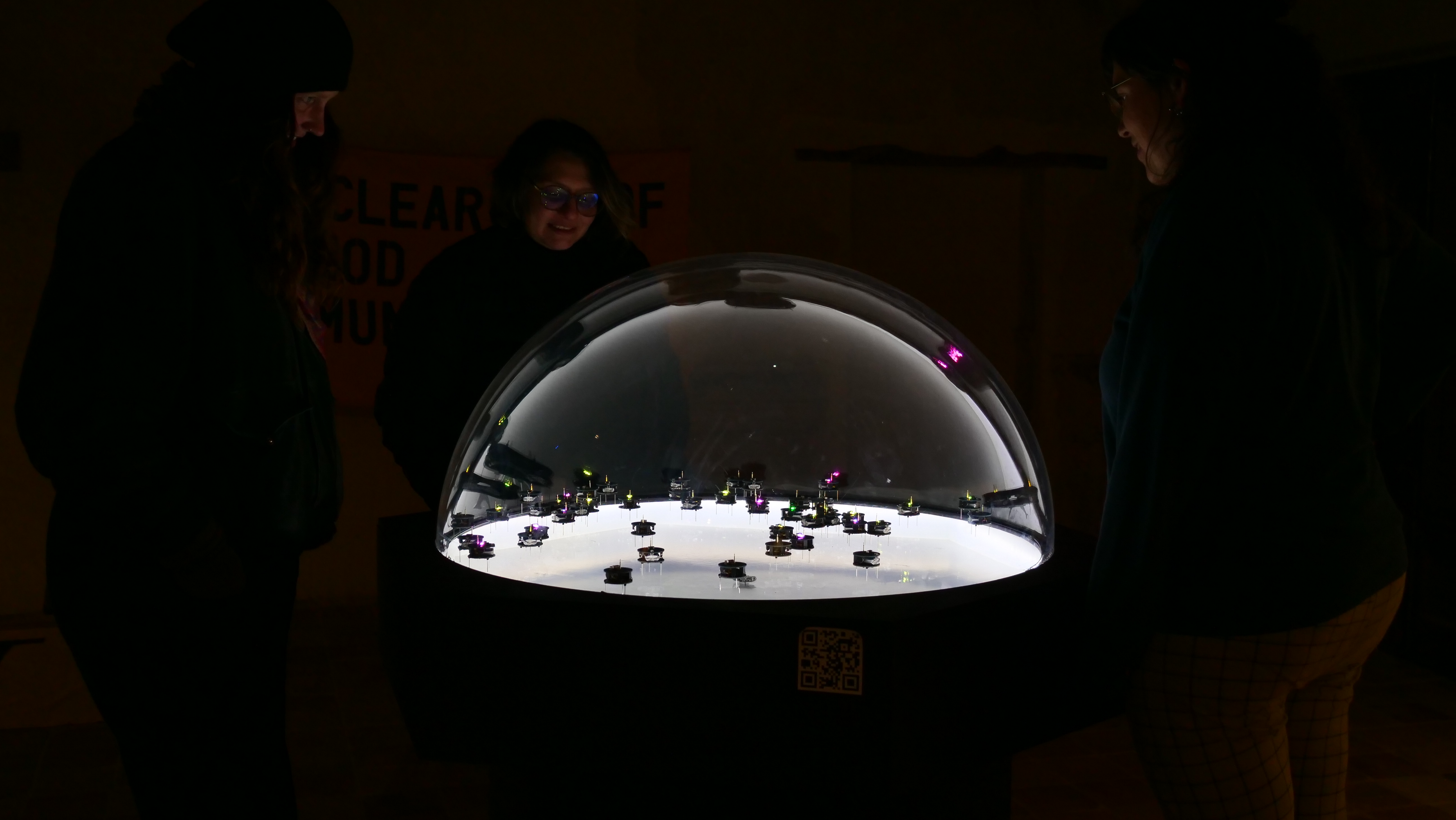
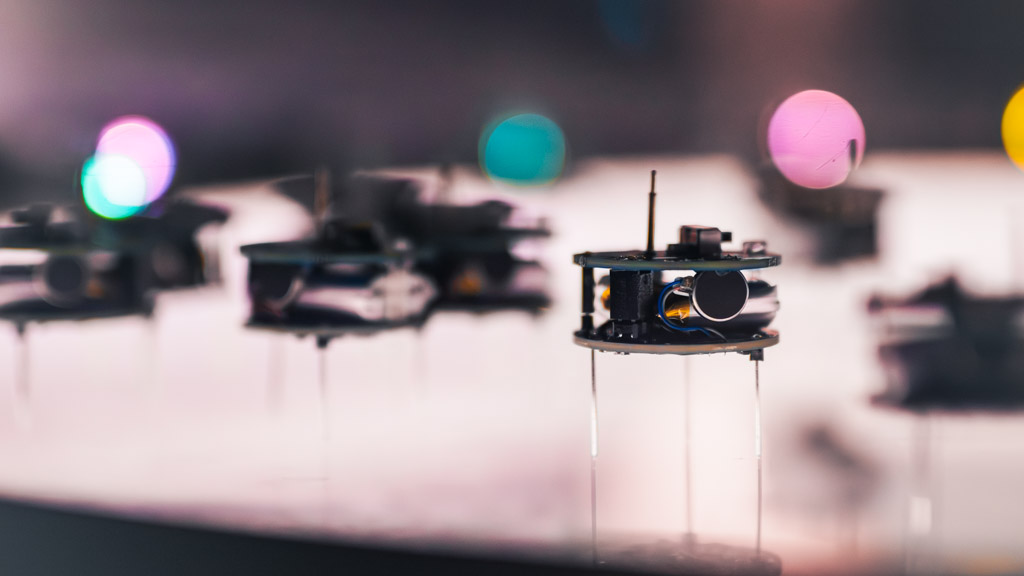
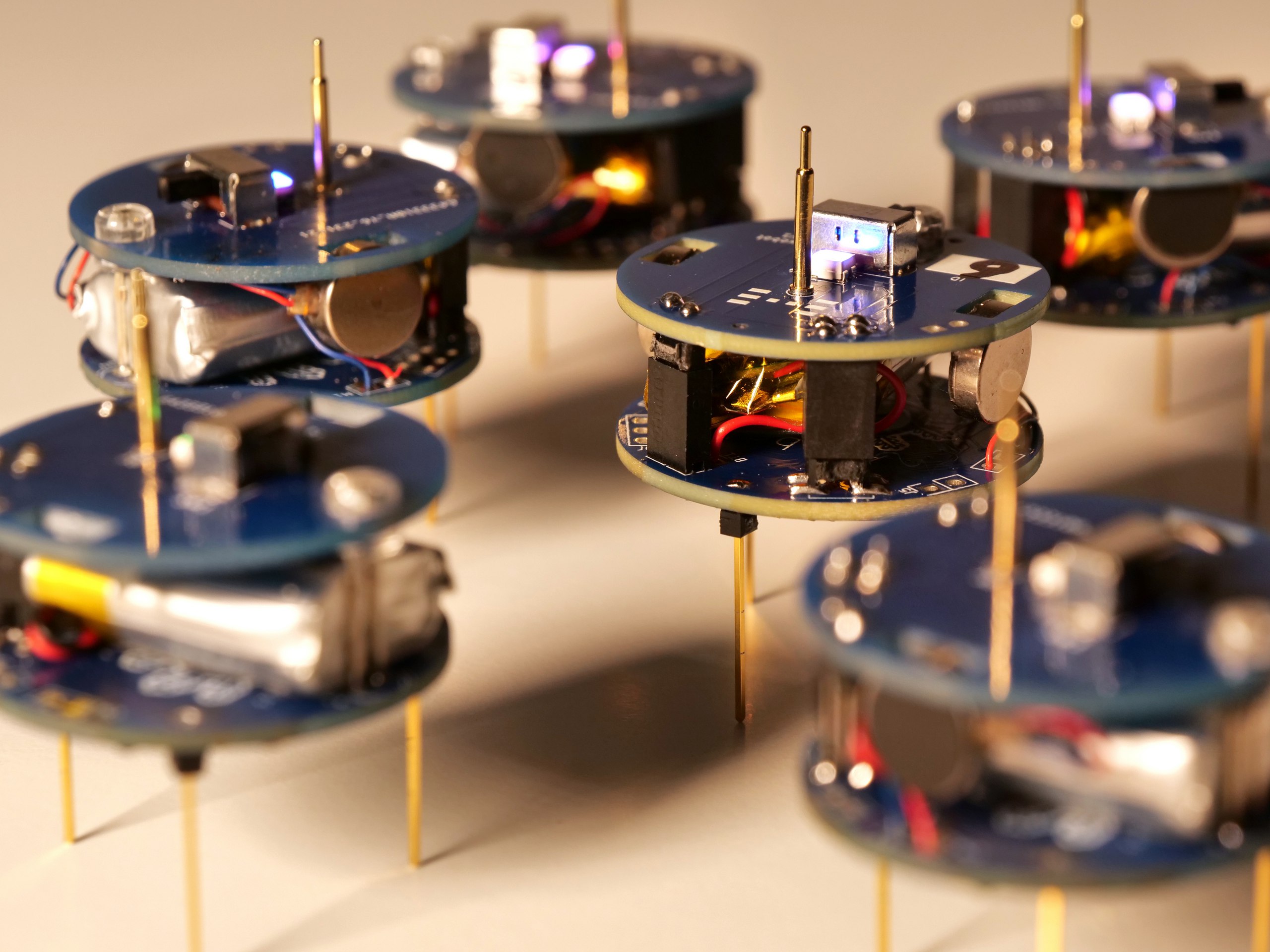
Eixam is an exploration of complex behaviors emerging from local interactions. Through a swarm of small robots, redesigned from the original Kilobots (Harvard, 2012), the piece shows how patterns of self-organization emerge in a system without a central control.
The robots flash their status through LED lights and subtle vibrations that generate movement. They are set in a darkened space, where their lights, and sounds that resemble the fluttering of bees (generated by the mapping of the light pattern), evolve in time. Viewers can observe how these beings "negotiate", influence their neighbors, and sometimes align in a collective behavior.
Inspired by recent research on behavioral avalanches and consensus building (Mugica et al., 2023; March-Pons et al., 2024), we explore how individual behaviors shape social dynamics. One example is the role of leadership as a catalyst for change. While leadership may seem at odds with self-organization, it can emerge as a characteristic of the system. Ultimately, it is the group’s response that defines a leader: a robot’s behavior can spread like an avalanche as others replicate it or fade if it fails to resonate. In consensus building, positive feedback amplifies behaviors while negative feedback stabilizes them. In our swarm, this unfolds as a conversation of light and sound: some robots remain stubborn to their decision, others are easily persuaded, and some change unpredictably.
Eixam challenges classical models that assume uniformity, by emphasizing individual diversity (preferences, beliefs, information, and spontaneity). It invites reflection on collective intelligence, drawing parallels with social, biological, and technological processes. From the simplicity of interactions among diverse individuals, a complex world emerges, where order and disorder coexist in a system far from equilibrium.
- Credits
-
-
Concept and production: Andrés Costa, Lina Bautista, Julia Múgica and Iván Paz
-
Algorithm design and programming: Julia Múgica and Iván Paz
-
Sound design: Lina Bautista
-
Electronics: Andrés Costa
-
Funding and support: AI&Music S+T+ARTS; Beques Barcelona Crea, Ajuntament de Barcelona
-
- Exhibitions
-
-
Digital After All May 14-17 2026
-
Sónar June 14–16, 2024
-
AMusicBOX
- Year
-
2025
- With
-
Lúa Coderch, Julia Múgica, Huaqian Zhang, Iván Paz, Lluís Nacenta, Andrés Costa
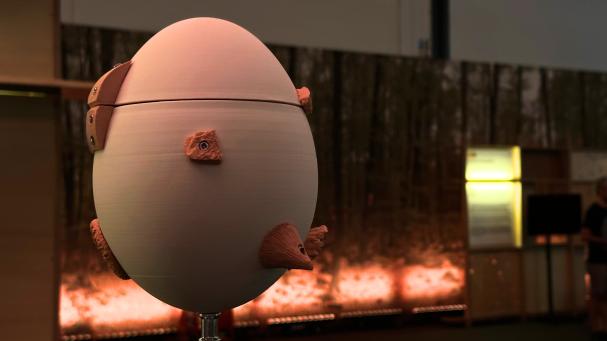
Algorithmic Music Box (A.MusicBox) is a digital, algorithmic, and generative reinterpretation of the traditional music box: a music box that generates a new musical piece every time it is opened, one that will never be repeated again.
Both the physical design of the box and the musical algorithm running on the Teensy microcontroller are released under open-source licenses, allowing other artists to build, print, and program their own A.MusicBox.
A.MusicBox is a musical work in the form of a tangible object that can be held in the hands. It functions as an unexpected and inexhaustible source of small musical configurations. Its generative system is based on polyrhythms and combinations of scales and timbres. Each time the box is opened, a new interplay of simple melodies and rhythms unfolds; while individually straightforward, their combinations give rise to rich and complex musical structures. In this sense, A.MusicBox offers a genuine exploration of computational music, where algorithmic logic and musical form become inseparable and deeply intertwined.
The fact that it is simply a box, with no options other than opening and closing it—evokes the idea of the automaton: a type of technology with which we interact solely through perception, accepting it on its own terms without direct intervention.
- Exhibitions
-
-
Sónar+D 2025
-
TRACES
- Year
-
2025
- With
-
Eva Castells (CREAF), Jordi Martinez (CREAF), Paula Bruna, Iván Paz and Lina Bautista
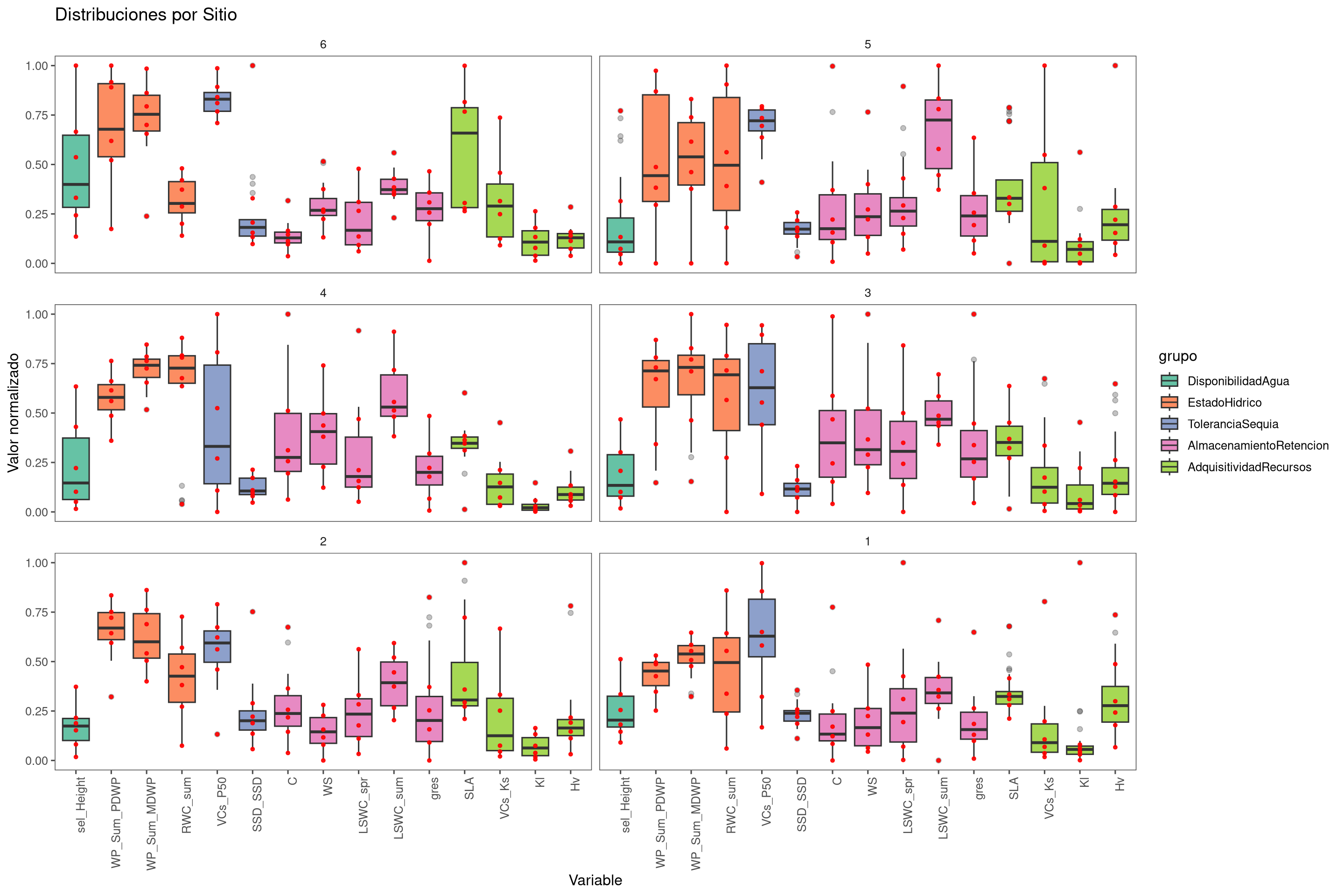
This project seeks to sonify the interactions between plant traits and climatic conditions across different species and sites, offering a new perspective on the multivariable relationships that determine plants' capacity to adapt to drought. By translating these complex relationships into sound, we aim to reveal how the interplay between these variables shapes plant resilience.
- Credits
-
-
Funding: Ecological and Forest Applications Research Center (CREAF).
-
Eco i l’oracle
- Year
-
2023
- By
-
Eduard Escoffet
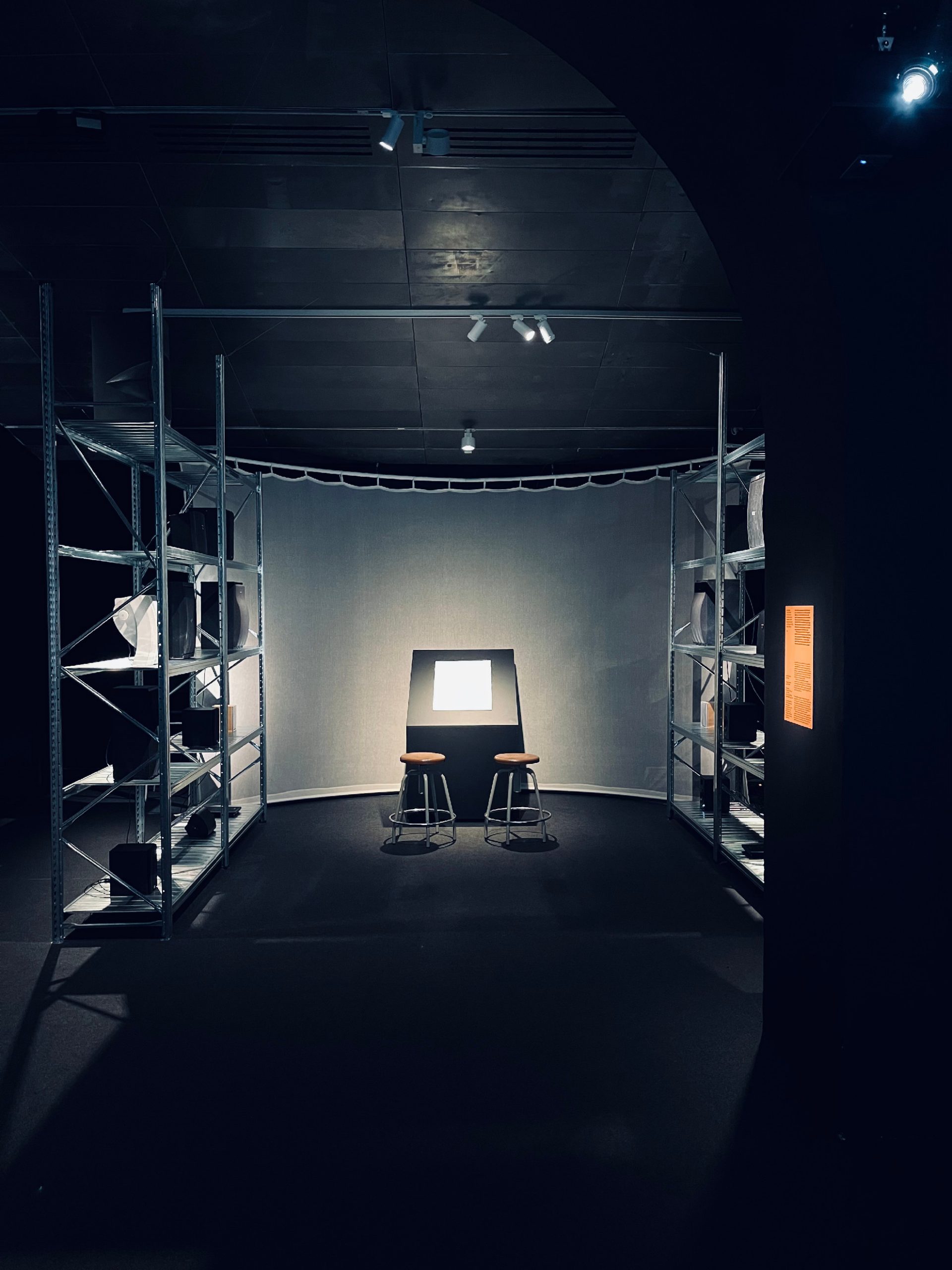
The installation proposes a reflection on the fears and epiphanies of AI. News about AI read by a synthetic model of the poet’s voice is integrated into a score that addresses the mineral basis of AI (geological time), the discoveries and global standards that have made it possible (historical time) and the incongruous sound of voices in the present, to which real breaths and vocalizations are added.
The title of the piece refers to the repetitive aspect of AI and the divine character we attribute to it. As evidenced by the text of Baltasar Gracián that presides over the shrine, we tend to think that we are at the end of time, but often the present does not allow us to understand the present.
- Credits
-
-
Conceptualization: Eduard Escoffet
-
Technical development (scraping, NLP, Markov chains, variational inference, and voice cloning): Axolot Collective
-
Funding: Barcelona Supercomputer Center (BSC) and Center for Contemporary Culture of Barcelona (CCCB). Project financed with the support and collaboration of FECYT – Spanish Foundation for Science and Technology – Ministry of Science, Innovation, and Universities.
-
- Exhibitions
-
-
AI: Artificial Inteligence, Exhibition at CCCB 2023
-
Other Collaborations
-
Soundtraj in collaboration with Javier de las Casas and Lina Bautista
-
Órbita by Citlali Hernández and Nuria Nia
-
Una Pell distant by Citlali Hernández and Nuria Nia
-
Embolismo por Soleá by Paula Bruna